Web Drive / WebDAV
Mounts as a network location — no separate app required on most systems.
A step-by-step reference for connecting to CloudWebHost Secure Cloud Storage: what you need before you start, how each operating system mounts the drive, and how this differs from FTP.
Mounts as a network location — no separate app required on most systems.
Encrypted connection, same address works in a browser or file manager.
Documents, media, backups and shared project folders.
Once you have the address, username and password ready.
Gather these details first — every platform guide below asks for the same three things.
Use the exact secure address given by your administrator:
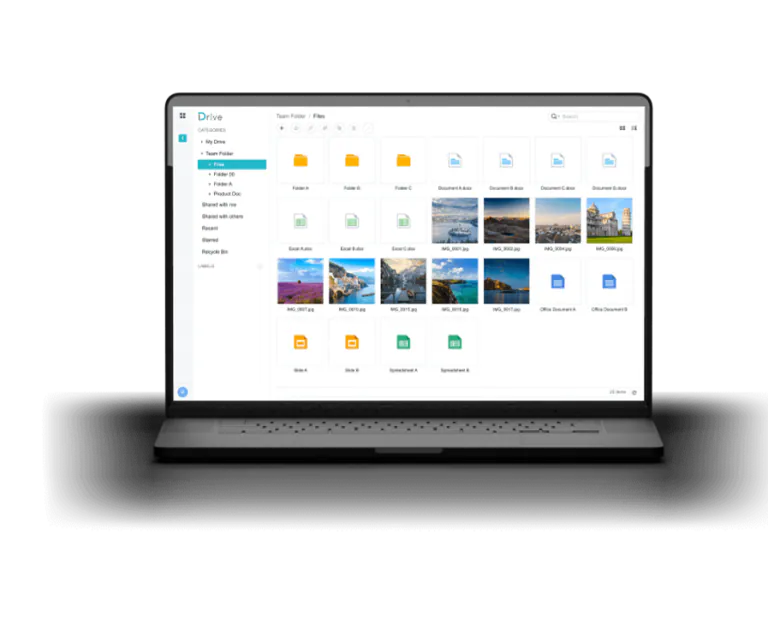
Documents, media, backups and shared folders — organised for daily use, not just archiving.
PDF, DOC, DOCX, XLS, XLSX, PPT, TXT, CSV
Images, video, audio, source and creative assets
ZIP, RAR, 7Z, exports and scheduled backup sets
| Category | Examples | Typical use |
|---|---|---|
| Business files | Invoices, contracts, reports, spreadsheets | Daily work access, organised business storage |
| Creative files | Photos, video, PSD, AI, source assets | Production workflows, client delivery, team access |
| Backup data | ZIP backups, exports, archives | Long-term protection and recovery |
| Shared project folders | Team folders, customer folders | Cross-device collaboration, controlled sharing |
Two ways to move files — built for different people.
Pick your operating system. Each step follows the connection thread down to a mounted drive.
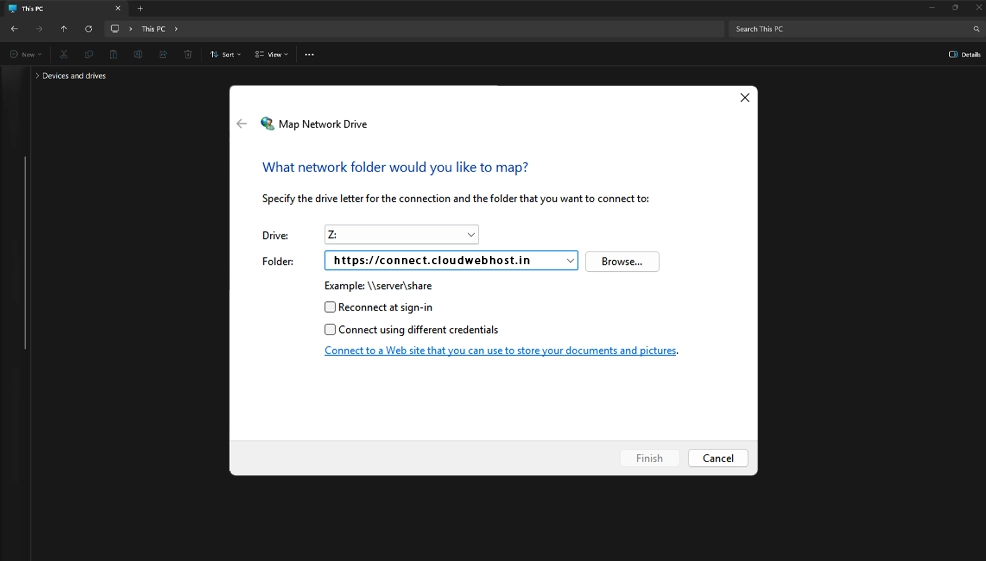
In File Explorer, click This PC in the left sidebar.
Right-click inside This PC, or use the ribbon menu.
Paste the secure URL when asked for the internet or network address.
Enter your username and password. Save credentials only on a trusted device.
Give it a clear label, e.g. "CloudWebHost Drive."
The drive appears in This PC — browse, upload and download normally.
Launch Finder from the Dock.
Or press ⌘K.
Type the WebDAV address, e.g. https://access.cloudwebhost.in or davs://access.cloudwebhost.in.
Enter your username and password, then sign in.
The drive mounts and appears in Finder like any connected volume.
Drag it into the sidebar for quick future access.
Files (Nautilus), Dolphin, or your preferred manager.
Find the remote-connection option in the sidebar.
Use the davs:// format for a secure connection.
Enter your storage username and password.
Upload, download and manage folders as usual.
Advanced users can mount via davfs2. Command varies by distribution.
Check these before contacting support.
Double-check the exact Web Drive URL — protocol and domain must match what was provided.
Confirm the username and password, and that the account has access to this storage location.
Usually means the SSL certificate isn't correctly installed. A valid HTTPS setup resolves this.
Verify the WebDAV endpoint is reachable and using a proper SSL certificate.
Depends on connection speed, file size, file count and server load.
Your account may have limited permissions — contact the administrator for upload or edit rights.
Copyright © 2026 Cloud Web Hosting . All rights reserved.